
Services
College
Planning
Register here for our next College Planning Workshop on July 15.
Free planning guide included!
The Real Financial Impact of College
Most families focus on paying for college.
The challenge is understanding how college decisions affect everything else.


Common Mistakes Families Make
Waiting too long to begin planning
Focusing only on 529 savings
Assuming financial aid is only based on income
Ignoring retirement tradeoffs
Failure to coordinate available resources
Why Different Strategies Create Different Outcomes
Every family’s financial situation is different. Income, assets, family size, retirement.
Number of college bound children
Parental contribution
High income/low assets
High assets/low income
Financial aid and merit scholarships


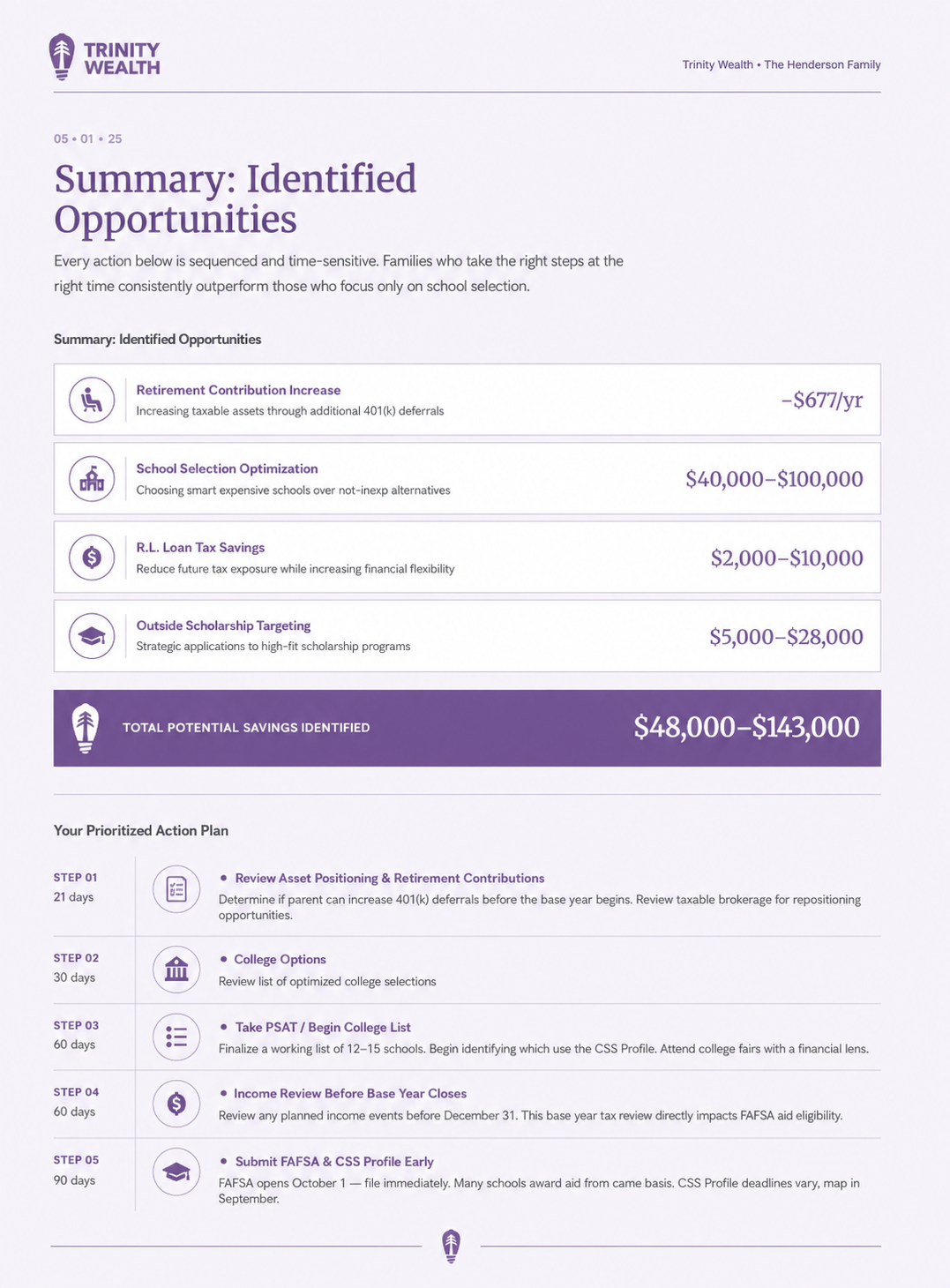
The Trinity College Planning Roadmap
Families who engage in deeper planning receive a personalized Trinity College Funding.
The Roadmap may include:
✓ Current Financial Analysis
✓ College Cost Analysis
✓ Cash Flow Planning Strategy
✓ Strategic Planning Opportunities
✓ Financial Aid & Scholarship Review
✓ Retirement Impact Analysis
✓ Funding Gap Analysis
✓ Recommended Path Forward
✓ 30 / 60 / 90 Day Action Plan
FAQs
-
The question is often bigger than how much you're saving. Understanding projected costs, available resources, funding gaps, retirement priorities, and financial aid opportunities can help families make more informed decisions.
-
The better question is often, “How much of college should I plan to fund?” College planning involves more than accumulating savings. Understanding projected costs, available resources, financial aid opportunities, retirement goals, cash flow, and funding trategies can help families determine an appropriate savings target.
-
For many families, a 529 plan is an important part of the solution—but not the entire solution. College planning involves more than saving money. Market volatility, financial aid, retirement goals, taxes, and funding flexibility can all influence outcomes. Understanding how these factors work together often leads to better long-term decisions.
-
Often, yes. The challenge is understanding the tradeoffs. College planning and retirement planning are closely connected, and decisions in one area can affect the other.
-
Many families assume financial aid is unavailable based on income alone. The reality is more nuanced. Understanding available options, funding strategies, and long-term financial goals often creates opportunities families don’t initially recognize.
-
Earlier planning often creates greater flexibility and more options. However, college planning is not simply about saving money—it’s about making informed decisions. Whether your child is in middle school, high school, or already preparing for college, understanding costs, funding strategies, financial aid opportunities, and long-term financial goals can help families make better decisions moving forward.
You don’t need all the answers today.
You need a process.
Start with a Clarity Visit and organize complexity into a clear path forward.